
Whole home
Whole-Home Electrification Cost Calculator
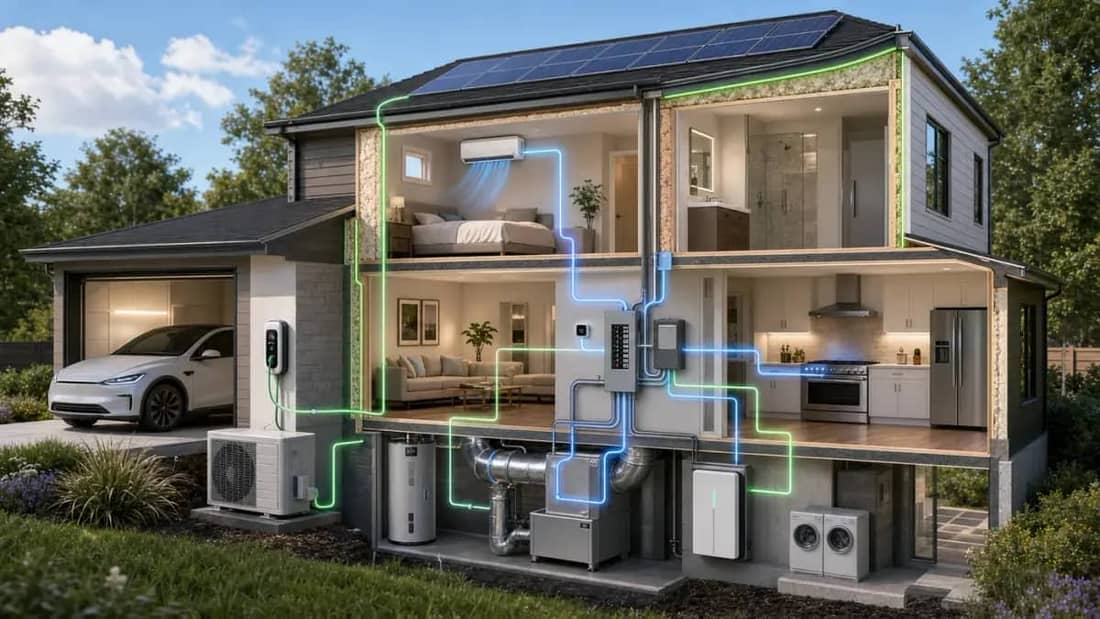
One combined estimate for every electric upgrade you might do — heat pump, HPWH, induction range, EV charger, and optional panel work. Panel-upgrade math is shared so you don't double-count one piece of electrical work across multiple modules.
Quick answer: a typical mid-cost full electrification (HP + HPWH + induction + EV charger, no panel upgrade needed) runs $14,000–$32,000 installed before incentives in most states. Net of current state rebates: $9,000–$26,000. Each module on its own may need 6 months to 5 years; doing them all at once is rare and rarely necessary.
Low
$12,675
Mid
$22,125
High
$40,125
Net cost after estimated incentives
Mid: $21,625$11,175 – $39,875
Combines confirmed federal credits, state programs, and DOE Home Energy Rebates where your state has launched. Potential incentives are not subtracted.
By upgrade
| Upgrade | Low | Mid | High |
|---|---|---|---|
| Heat pump (HVAC) | $7,900 | $13,250 | $22,675 |
| Heat pump water heater | $2,025 | $3,525 | $6,625 |
| Induction range | $1,075 | $2,075 | $4,050 |
| EV charger (Level 2) | $1,000 | $2,025 | $4,400 |
| Shared panel work (probabilistic) | $675 | $1,250 | $2,375 |
| Total (gross) | $12,675 | $22,125 | $40,125 |
Panel work is shared: we use the worst-case adder across modules, not the sum, because one upgrade typically supports multiple loads.
Estimated monthly bill change (combined)
−$9/ mo
Sum of each module's operating-cost change vs. your current fuels. Range: -$24 to $6 per month.
Possible additional incentives
Not subtracted from your net cost. Eligibility depends on confirmation.
- TECH Clean California - Heat Pump HVACup to −$3,000
- TECH Clean California - HPWHup to −$1,000
Important caveats for whole-home estimates
- Estimates are planning ranges, not contractor quotes. Actual prices depend on your home, local labor rates, equipment, code requirements, utility rules, and contractor availability.
- Some incentives are surfaced as "potential" because eligibility is not yet confirmed; they are not subtracted from your net cost.
- Whole-home figures assume one shared panel upgrade if any module triggers one — the panel adder is taken from the worst-case module, not summed.
New to whole-home electrification?
"Going electric" doesn't happen all at once. The right framing is a 5–10 year sequence: each fossil appliance gets replaced with an electric one when it naturally fails or you're renovating anyway. Heat pump first (biggest bill move), then EV charger, then HPWH, then induction. Panel work only if a load calculation says you need it.
Read the full guide 10-min read · ordering · incentive stacking · panel math · timing your sequence
Frequently asked questions
What is whole-home electrification?
Whole-home electrification is replacing the fossil-fuel-burning appliances in your home — gas/oil furnace, gas water heater, gas range — with electric alternatives (heat pump, heat pump water heater, induction range) and adding the electrical infrastructure (panel + EV charger) to support them. It typically happens over 5–10 years as equipment naturally reaches end-of-life, not all at once.
Do I have to do everything at the same time?
No. Whole-home electrification works best as a 5–10 year sequence. Most homeowners go heat pump first (the biggest single bill-savings move), then EV charger (when the next car becomes electric), then HPWH when the existing water heater fails, then induction during a kitchen refresh. A standalone panel upgrade only makes sense if one of those triggers it; otherwise smart load management can defer it.
What is the optimal order?
Insulation and air-sealing first if your envelope is leaky — they shrink every other estimate. Then heat pump (replaces your two biggest combustion appliances at once). Then EV charger if a car purchase is coming. Then HPWH at next water-heater end-of-life. Then induction during the next kitchen project. Panel work only if a load calc says you need it.
What incentives stack across modules?
In 2026 the federal 25C credit (heat pumps, HPWH, panel, insulation, windows), the 25D credit (solar, battery, geothermal), and the 30C EV charger credit no longer apply — OBBBA terminated 25C and 25D for property placed in service after 2025-12-31, and 30C expired for property placed in service after 2026-06-30. DOE Home Energy Rebates (HEEHRA / HOMES) are administered by states; caps stack across modules up to a per-household maximum. State and utility rebates stack independently. Our calculator surfaces confirmed vs. potential incentives separately so you do not overcount.
Per-module calculators
- Heat pump cost calculator
- Electrical panel upgrade calculator
- Heat pump water heater calculator
- EV charger installation calculator
- Induction stove cost calculator
Whole-home electrification often rides along with other renovation work. For the non-electric pieces — roofing, siding, windows, kitchen and bath, driveways — ProjectCostPro covers 50+ home-project cost calculators.