
Hot water recirculation
Hot Water Recirculation Pump Cost Calculator
Cost calculator for dedicated-return, crossover, demand-activated, and timer-based hot water recirculation pumps. Water + energy savings modeled.
Quick answer: crossover undersink (most common retrofit) $400–$1,200 installed. Demand-activated $600–$1,800. Dedicated return loop $1,000–$2,800. Mostly a comfort upgrade — financial savings are modest.
Optional — auto-sets state
Installed cost · Demand-activated (most efficient) · California
$994
range $572 – $1,738
Water saved
10,000 gal/yr
Water-bill savings
$85/yr
Pump electricity
−$28/yr
See the single most-likely cost and the realistic range it falls in — not just a low/high band.
Method: each cost line is drawn from a triangular distribution and correlated by a shared market factor (~0.5), then sampled across 10,000 outcomes (a Monte Carlo simulation); the most-likely value and range emerge from the simulation, not the band. A planning simulation, not a quote.
New to recirculation?
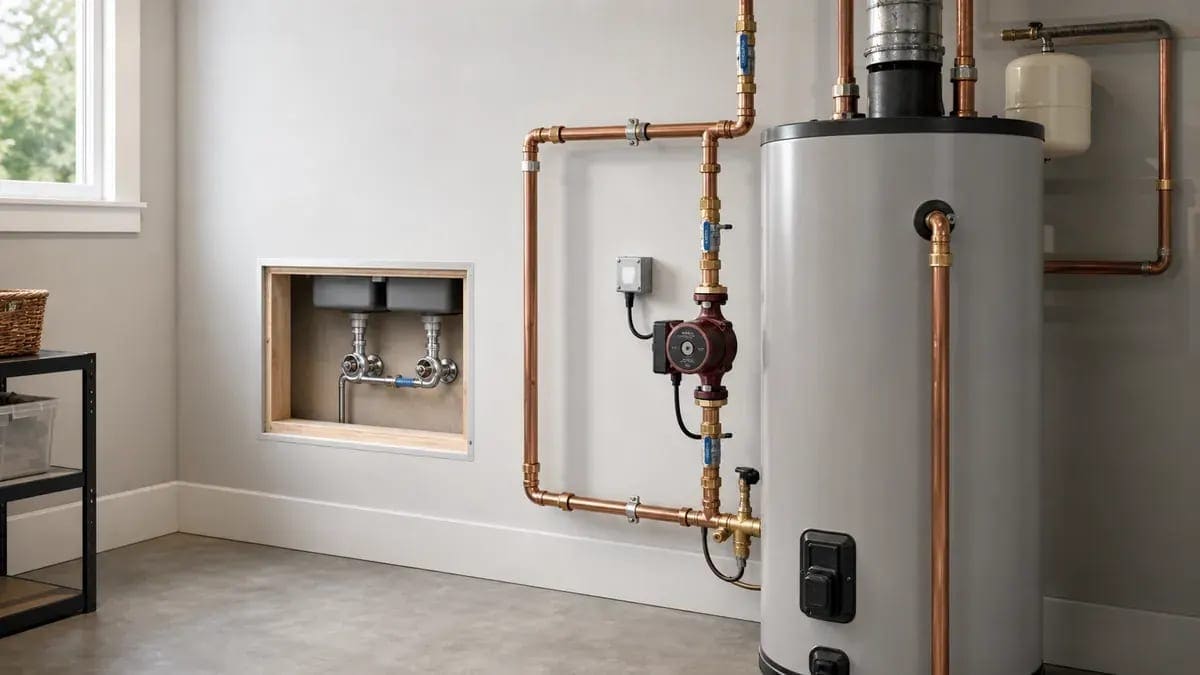
A recirculation pump keeps hot water moving through your supply pipes so you don’t wait 30-60 seconds at the tap. Five mainstream approaches exist, each with its own water-vs-energy tradeoff. The right choice depends on whether you’re renovating (dedicated return wins), retrofitting (crossover), or optimizing for efficiency (demand-activated).
Frequently asked questions
How much does a hot water recirculation pump cost installed?
Crossover undersink (most common retrofit): $400–$1,200 installed. Demand-activated (button or motion): $600–$1,800. Dedicated return loop (best performance, renovation only): $1,000–$2,800. Timer-only continuous pump: $400–$1,200. Tankless-compatible kit: $900–$2,400.
Does a recirculation pump save money?
It saves water (3,000–12,000 gallons/yr) but the financial savings are small — usually $30–$110/yr on water+sewer. Timer-pump systems can actually INCREASE energy use through standby tank losses. Only demand-activated systems reliably save both water AND energy. The real reason most people install one is comfort: hot water at the tap in 1-2 seconds instead of 30-60.
Will a recirculation system work with tankless?
Yes but with caveats. Most tankless water heaters from 2015+ have built-in recirculation modes (Navien NPE-A2, Rinnai SE+, Noritz EZTR50) — best path. Aftermarket kits (Watts Premier, Grundfos Comfort) work but require a buffer tank or you’ll get cold-water sandwiches. Demand-activated is essentially the only sensible retrofit for non-recirc-ready tankless.